Published on March 15, 2025
Only in Canada could maple syrup become the subject of organized crime, international intrigue, and economic theory all at once. We're talking about a country where someone actually said, "You know what we need? A strategic reserve of pancake topping," and everyone else nodded seriously and allocated budget for it.
Welcome to the weird, wonderful world of Quebec's maple syrup cartel, officially known as the Federation of Quebec Maple Syrup Producers, but functionally operating like the OPEC of breakfast condiments.
The Great Canadian Syrup Heist
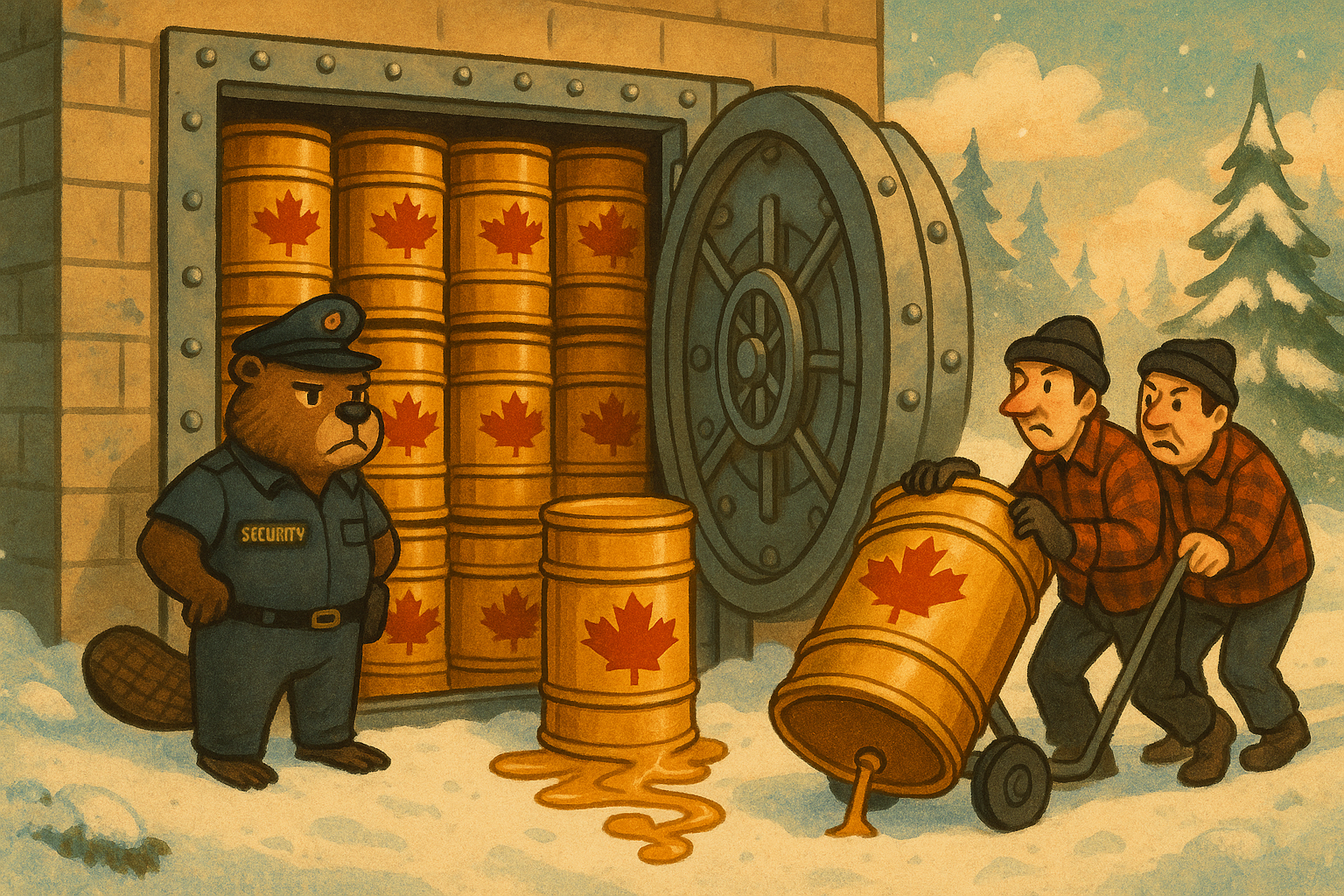
Let me tell you about the most Canadian crime in history: the Great Maple Syrup Heist of 2011-2012. Someone, and I mean this with complete sincerity. Stole 18.7 million pounds of maple syrup worth $18.7 million from Quebec's strategic reserve.
Think about that for a moment. Criminals looked at all the possible things they could steal, cars, jewelry, electronics, and decided that maple syrup was their best bet. They weren't wrong, which tells you exactly how valuable this stuff has become.
The thieves literally ran a maple syrup laundering operation, selling stolen syrup on the black market while replacing the missing inventory with water to avoid detection. It was like Ocean's Eleven, but with more pancakes and probably a lot more apologizing.
When the scam was discovered, investigators found warehouses full of syrup barrels that had been carefully drained and refilled with water. The Federation had been guarding what amounted to the world's most expensive water storage facility.
How to Build a Breakfast Monopoly
Quebec produces about 71% of the world's maple syrup, which gives them roughly the same market power that Saudi Arabia has over oil, except stickier and more delicious. The Federation of Quebec Maple Syrup Producers controls this supply like they're running a sweet, delicious OPEC.
Here's how it works: every maple syrup producer in Quebec must sell their product to the Federation, which then controls pricing, quality standards, and global distribution. It's supply management taken to its logical extreme, where bureaucrats literally determine how much pancake topping the world gets to enjoy.
The Federation maintains a strategic reserve of maple syrup, yes, that's a real thing, to smooth out supply fluctuations and maintain stable pricing. It's like having a national emergency stockpile, except instead of medical supplies or grain, it's breakfast syrup.
Think about the conversations that led to this system: "What if there's a bad maple season?" "Well, we'd better stockpile millions of pounds of syrup, just in case." "Brilliant! Also, we should probably hire security guards to protect it." "Obviously."
The Economics of Liquid Gold
The maple syrup market reveals fascinating truths about agricultural economics and the power of organized producers. When you control most of the world's supply of something people really want, you can essentially set whatever price you think the market will bear.
Quebec's system works because maple syrup production is limited by geography and climate. You can't just decide to start making maple syrup in Arizona. The trees won't cooperate. This natural monopoly creates the perfect conditions for supply management to actually function.
The Federation sets quality standards that have become international norms, meaning they're not just controlling supply. They're defining what "real" maple syrup even means. It's like being the dictionary for deliciousness.
But here's the kicker: consumers generally don't mind paying higher prices for Quebec maple syrup because it's perceived as premium, authentic, and worth the cost. The Federation has successfully branded their product as the gold standard, making price competition almost irrelevant.
When Breakfast Becomes Geopolitics
Quebec's maple syrup dominance creates interesting international trade dynamics. Other maple-producing regions, like Vermont, New York, Ontario, struggle to compete with an organized cartel that controls pricing and marketing on a global scale.
The Federation's grading system becomes the international standard, which means they're not just selling syrup. They're selling the definition of quality syrup. It's like controlling both the product and the measuring stick used to evaluate it.
This creates occasional trade disputes when other countries challenge Quebec's practices, but maple syrup isn't exactly a high-priority trade issue for most international negotiators. It's hard to get worked up about pancake topping when you're also dealing with steel tariffs and energy disputes.
The Climate Change Curveball
Here's where things get interesting for the future of the syrup cartel: climate change is threatening traditional maple-producing regions. Warmer winters, unpredictable weather patterns, and shifting growing zones could disrupt the geographic advantages that make Quebec's system possible.
If maple syrup production becomes viable in new regions, or if traditional areas become unreliable. The Federation's natural monopoly could erode. Suddenly, the carefully controlled supply management system faces competition from unexpected places.
Consumer preferences are also shifting toward diverse sweetener options. Younger generations might prefer local honey, agave nectar, or whatever the next trendy sweetener turns out to be. The Federation's challenge is maintaining relevance in a market with expanding choices.
Lessons from the Syrup Wars
Quebec's maple syrup industry demonstrates how agricultural organizations can wield disproportionate economic influence through effective coordination and government support. It's a masterclass in turning natural advantages into sustained market power.
Whether this benefits consumers is debatable. Supporters argue that supply management ensures quality, supports rural communities, and maintains stable pricing. Critics contend that it artificially inflates prices and stifles competition.
What's undeniable is that this system has turned maple syrup from a seasonal agricultural product into a year-round economic force. The Federation has created jobs, generated export revenue, and made Quebec synonymous with premium maple syrup globally.
The Sweet Bottom Line
Next time you pour maple syrup on your pancakes, remember that you're participating in one of the world's most successful agricultural cartels. That golden liquid represents decades of strategic planning, international marketing, and occasionally, organized crime.
The maple syrup industry proves that Canadians can be just as ruthless as anyone else in protecting our economic interests. We just do it politely, with products that make breakfast better.
Whether you see it as smart agricultural policy or breakfast monopolization depends on your perspective. But you have to admire the audacity of turning tree sap into international economic power.
Only in Canada would we corner the global market on something that makes waffles taste better, then build a strategic reserve to protect our pancake-based geopolitical advantages.
Sweet, sticky, and surprisingly sophisticated, just like Canada itself.
References
Government and Institutional Sources:
- Federation of Quebec Maple Syrup Producers, "Annual Reports 2020-2024"
- Agriculture and Agri-Food Canada, "Maple Syrup Industry Profile"
- Statistics Canada, "Farm Product Price Index - Maple Products"
- Quebec Ministry of Agriculture, "Maple Syrup Production Statistics"
Books:
- The Sugar Season: A Year in the Life of Maple Syrup by Douglas Whynott - Amazon Canada
- Sweetness and Power: The Place of Sugar in Modern History by Sidney Mintz - Amazon Canada
- The Economics of Agricultural Development by George Norton - Amazon Canada
- Supply Management: The Making of Canadian Agricultural Policy by Grace Skogstad - Amazon Canada
Media and Documentation:
- CBC News, "The Great Maple Syrup Heist Documentary" 2022
- National Film Board of Canada, "Maple Syrup: Liquid Gold"
- Radio-Canada, "La réserve stratégique de sirop d'érable"
- Personal experience being amazed by Canadian agricultural ingenuity