Published on February 28, 2025
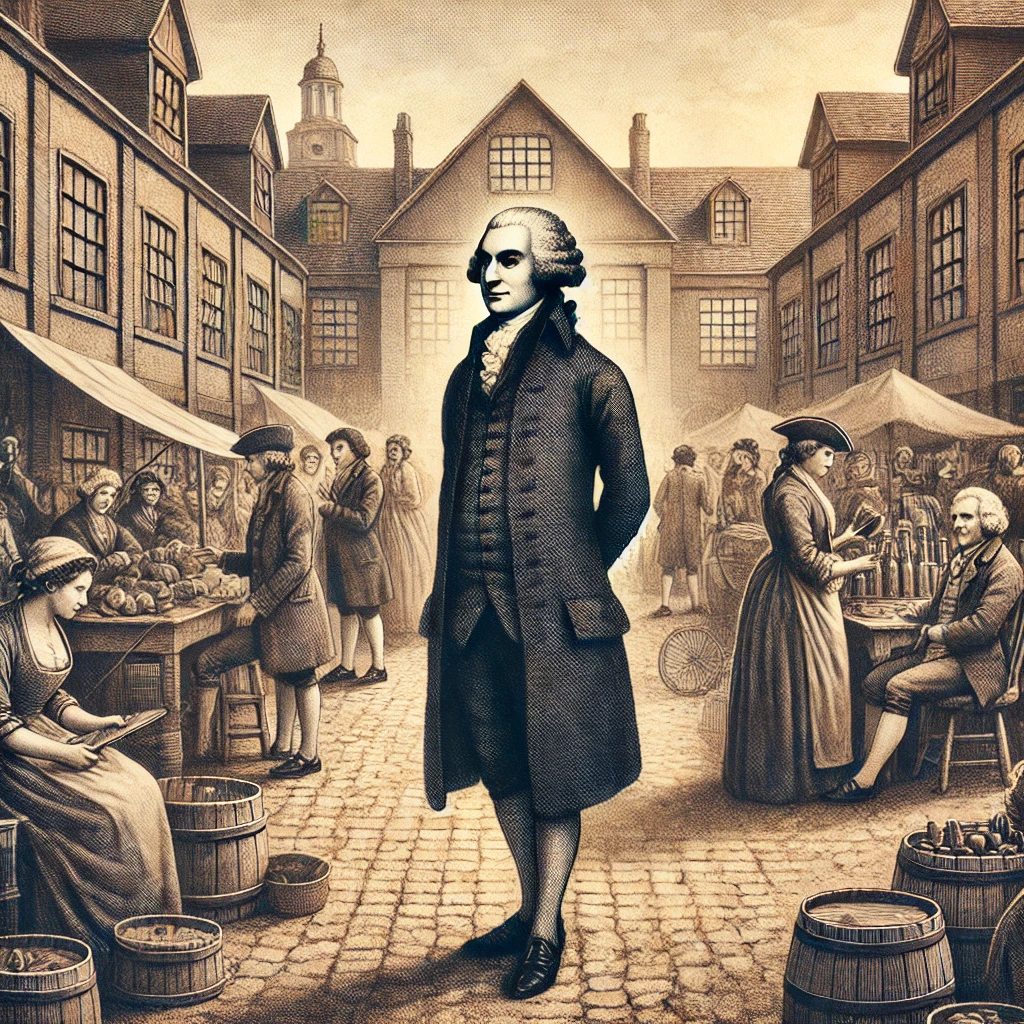
Back in the 1700s, Scottish economist Adam Smith had this brilliant idea about an "invisible hand" guiding free markets. Picture it like this: everyone chasing their own self-interest somehow magically creates the best outcome for society. It's the economic equivalent of saying that if everyone just does their own thing at a hockey game, we'll somehow end up with perfect teamwork.
Smith's theory suggests that private greed can ironically lead to public good, which sounds like something an economist would say to justify not feeling guilty about capitalism.1
When the Invisible Hand Needs Reading Glasses
But hold on a minute, if markets really do find their own perfect balance, why does my grocery bill keep climbing faster than a Toronto condo price? And why do we still get those delightful economic crashes that make everyone suddenly very interested in their RRSP statements?
Just last week, I was standing in line at Metro (the grocery store, not the TTC), watching a woman ahead of me put back a package of ground beef because it had jumped to $8.99 a pound. That's when it struck me, if the invisible hand is supposed to keep prices reasonable, maybe it needs to see an optometrist.
Smith's invisible hand was designed for a simpler time, when the fastest communication was a guy on horseback, and "going viral" meant getting the plague. Today's markets face challenges that would make Smith reach for a very visible drink:
Corporate Consolidation Gone Wild: When three companies control most of the grocery chains, that invisible hand starts looking suspiciously like a fist. It's hard for markets to self-regulate when there's barely any competition left to regulate.
Market Shocks That Shock: Pandemics, natural disasters, and the occasional politician having a Twitter meltdown can overwhelm any market's ability to self-correct. It's like expecting that hockey team to maintain perfect formation while someone keeps changing the rules mid-game.
Government Intervention: Even the most free-market politicians end up bailing out banks and airlines when things go sideways. Turns out the invisible hand sometimes needs a very visible helping hand from taxpayers.
The Twitter Age: When 280 Characters Move Billions
In Smith's day, market-moving news took weeks to travel. Now? A single tweet can send global markets spinning faster than a Zamboni on fresh ice.
Take our neighbors to the south during the Trump presidency. A 3 AM tweet about tariffs could wipe billions off steel company valuations before most people had their morning coffee. Steel company stocks would plummet 15% because someone in Washington decided to tweet their economic policy at dawn. When the former president praised or criticized companies on Twitter, their stock prices would jump around like caffeinated squirrels at a bird feeder.
This isn't the slow, methodical invisible hand that Smith envisioned. This is more like an invisible hand with ADHD, constantly distracted by whatever's trending on social media.
What Still Makes Sense (And What Doesn't)
Don't get me wrong. Smith's basic insight still holds water. When people pursue their own interests in competitive markets, good things generally happen. The Tim Hortons on my corner doesn't serve me decent coffee because they care about my feelings; they do it because they want my money, and they know I'll drive an extra five minutes to the other location if their coffee tastes like dishwater.
I learned this lesson the hard way when a new coffee shop opened up across from my regular Timmies. Within a week, my usual spot had mysteriously improved their service speed and started offering better pastries. The invisible hand was apparently watching the whole time, just needed a little competition to get motivated.
But the modern economy isn't the village marketplace Smith had in mind. We've got:
- Multinational corporations that can influence entire governments
- High-frequency trading algorithms making thousands of trades per second
- Social media influencers who can tank a company's reputation with a single viral video
- Central banks printing money like it's going out of style
The invisible hand is still there, but it's competing with a lot of very visible hands for control of the steering wheel.
The Canadian Reality Check
Here in Canada, we've never fully bought into the "pure free market" fantasy anyway. We're comfortable with government-run healthcare, regulated banking, and supply management for dairy farmers. Maybe that's because we've always been a bit skeptical of invisible hands. We prefer our economic guidance to be as polite and visible as everything else we do.
I mean, when was the last time you heard a Canadian say, "Just let the market figure it out"? We're more likely to form a committee, have a public consultation, and apologize to the market for any inconvenience caused by our intervention. It's the most Canadian approach to capitalism imaginable.
Our markets work pretty well, not because they're perfectly free, but because we've figured out when to let the invisible hand do its thing and when to step in with some good old-fashioned regulation.
So, Is the Hand Still Invisible?
Adam Smith's invisible hand remains one of economics' most powerful insights. Competitive markets really can allocate resources efficiently and drive innovation. But in an era where a cryptocurrency can lose half its value because a billionaire changes his Twitter bio, we might need to admit that the hand isn't quite as invisible as it used to be.
Maybe that's not such a bad thing. After all, if the hand is visible, at least we can see what it's up to, and occasionally tell it to keep its fingers out of the cookie jar.
The invisible hand will always be the backbone of free-market economics. But these days, it's got a lot of company on the controls, from algorithm-driven trading to tweet-happy politicians. The challenge is figuring out how to make them all play nicely together without ending up in a regulatory hockey fight.
Just don't expect them to form a perfect hockey team anytime soon.
References:
Books:
- Smith, Adam. The Wealth of Nations. Bantam Classics, 1776.
- Stiglitz, Joseph E. People, Power, and Profits. W. W. Norton & Company, 2019.
- Krugman, Paul. The Return of Depression Economics. W. W. Norton & Company, 2009.
Government and Institutional Sources:
- Bank of Canada, "Market Efficiency and Price Discovery," 2024
- Statistics Canada, "Corporate Concentration in Canadian Industries," 2024
- Competition Bureau Canada, "Market Competition Assessment," 2024