Published on January 30, 2025
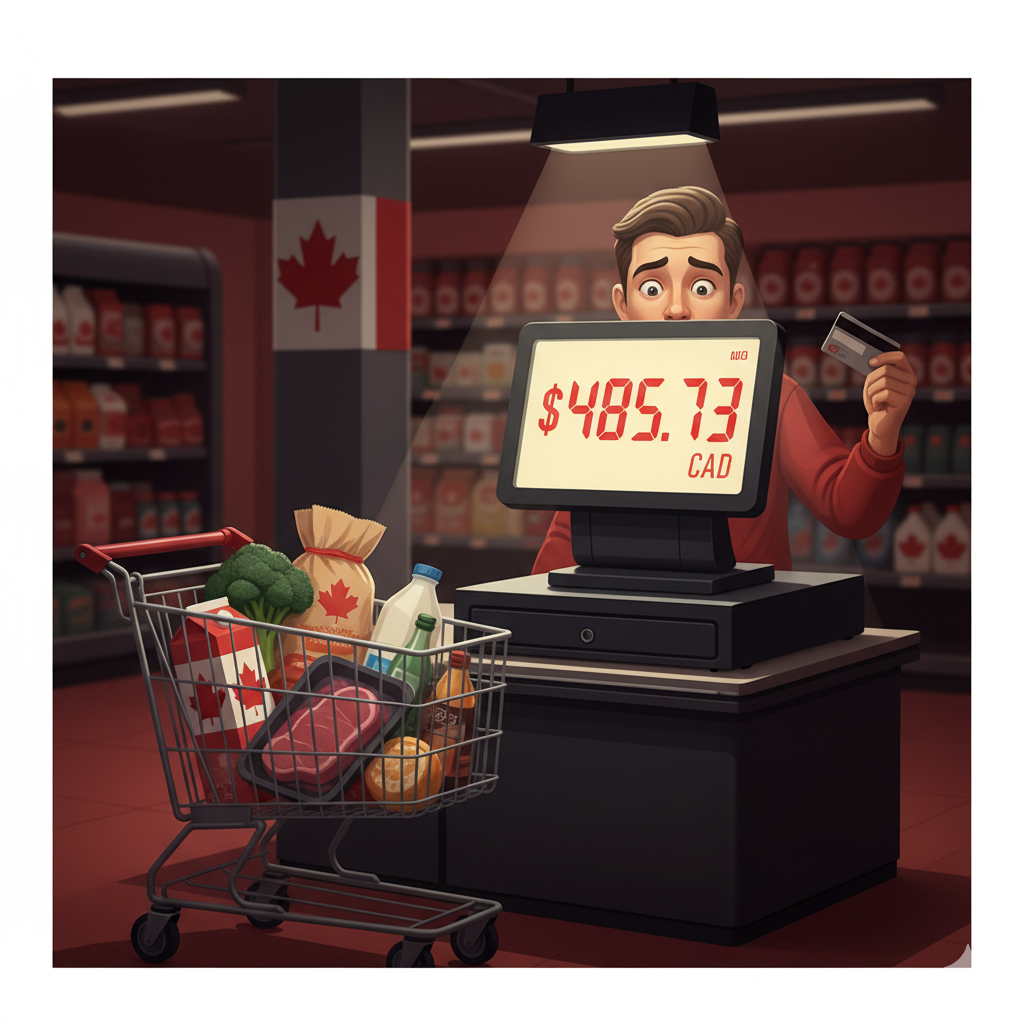
You know that moment when you're standing at the grocery checkout, watching the numbers climb like a gas pump from the 1970s? Your cart contains what feels like a modest week's worth of food, but the total suggests you've accidentally purchased a small car instead of groceries.
Welcome to the Great Canadian Grocery Bill Mystery, where a bag of apples costs more than your Netflix subscription and you need a credit check to buy cheese.
The Numbers
According to Statistics Canada, food prices increased by 9.1% in 2022 and continued rising through 2024¹. That means if you spent $200 on groceries in 2022, you're now paying approximately $238 for the exact same items. While food inflation averaged 9.1% nationally, some categories saw much steeper increases. Fresh vegetables jumped 11.8%, while bakery products rose 14.8%². So yes, your bread really is that much more expensive, and no, you're not imagining things.
For context, the average Canadian household now spends about $13,907 annually on food, according to Statistics Canada's latest Household Spending Survey³. That's roughly $1,159 per month, or about $267 per week for a typical family.
Why Prices Are High
Canada's grocery industry is dominated by just three companies. Loblaw Companies, Sobeys, and Metro collectively control about 80% of the Canadian grocery market⁴. Compare that to the United States, where the top three grocery chains control only about 35% of the market⁵. This concentration matters because when you have fewer competitors, you have less pressure to keep prices competitive. Loblaw Companies reported a gross profit margin of 31.1% in their most recent quarter, while Metro reported 22.8%⁶. Compare that to Walmart's grocery division, which operates on margins around 15-20%⁷.
Canada's food supply chain has some unique characteristics that affect your grocery bill. Canada imports about 60% of its fresh fruits and vegetables¹⁰. That avocado you're buying in February traveled thousands of kilometers and crossed at least one border. Currency fluctuations, international transportation costs, and trade policies all factor into the final price. When the Canadian dollar weakened against the US dollar in 2022-2023, it made all those imported vegetables more expensive for Canadian retailers to purchase, which gets passed on to consumers.
Ever wonder why strawberries cost $8 per basket in January but $3 in June? Canada's growing season is, shall we say, limited by our enthusiasm for winter. According to Agriculture and Agri-Food Canada, we produce only about 40% of the fruits and vegetables we consume¹¹. The rest comes from warmer places with more reasonable attitudes toward winter weather.
Raw commodity prices don't always correlate directly with retail food prices. Wheat prices might be stable, but bread prices can still rise due to processing, packaging, distribution, and retail markup costs. Food processing in Canada is also somewhat concentrated. George Weston Limited (which owns Loblaw) also owns significant food processing operations¹². This vertical integration can create situations where the same company controls multiple stages of the food supply chain.
The Carbon Tax Reality
Before you start planning a strongly-worded letter to your MP, let's examine the carbon tax impact on food prices. The federal carbon tax adds approximately 11 cents per litre to gasoline and diesel fuel⁸. This affects food transportation costs, but probably not as much as you might think.
Transportation typically accounts for about 3-5% of the final retail price of most food items⁹. So even a significant increase in fuel costs translates to a relatively modest increase in grocery prices. The bigger factors are typically commodity prices, labour costs, and processing expenses.
What You Can Do
Shop seasonally and locally when possible. That Ontario apple in October will cost less than the Chilean apple in March. The Farmers' Markets of Ontario website lists over 200 farmers' markets across the province¹³. Compare store prices systematically. The Competition Bureau of Canada found that prices can vary by 20-30% between different grocery chains for identical products¹⁴. Consider bulk buying for non-perishables. Costco and other warehouse stores can offer genuine savings on items you use regularly, though you need to do the math on membership costs. Use store loyalty programs strategically. While they're primarily data collection tools for retailers, they can provide legitimate savings if you're shopping there anyway.
Want to feel better (or worse) about Canadian grocery prices? According to the OECD, Canada ranks about middle of the pack for food affordability among developed nations¹⁵. We pay more than Americans but less than many European countries when food costs are measured as a percentage of household income. Interestingly, while our grocery bills seem high, Canadians actually spend a smaller percentage of their income on food than most other countries. Food represents about 10.6% of Canadian household spending, compared to the global average of around 17%¹⁶.
The Bottom Line
The Great Canadian Grocery Bill Mystery isn't really a mystery at all. It's the result of market concentration, supply chain realities, seasonal limitations, and the basic economics of being a northern country that likes to eat tropical fruit year-round.
Will grocery prices come down? Probably not to pre-pandemic levels. Food inflation has slowed but hasn't reversed, and some structural factors (like market concentration) aren't changing quickly.
The good news? You're not imagining the sticker shock, and you're not bad at budgeting. Grocery prices really have increased significantly, and most Canadian families are dealing with the same financial adjustment.
Understanding why these increases happen can help you make more informed decisions about where and how to shop. And sometimes, knowing you're not crazy is half the battle.
Just remember: when you're standing in that checkout line, watching your grocery total climb toward mortgage payment territory, you're participating in a complex economic system that spans continents and involves everything from weather patterns in California to fuel prices in Alberta.
It's not personal. It's just economics. Very expensive economics.
References
[1] Statistics Canada. "Consumer Price Index, annual average, not seasonally adjusted." Table 18-10-0005-01. 2024.
[2] Statistics Canada. "Consumer Price Index by product group, monthly, percentage change, not seasonally adjusted." Table 18-10-0004-01. 2024.
[3] Statistics Canada. "Household spending, Canada, regions and provinces." Table 11-10-0222-01. 2024.
[4] Competition Bureau Canada. "Market Study into the Competitiveness of the Canadian Grocery Industry." 2023.
[5] United States Department of Agriculture Economic Research Service. "Retail Food Industry Market Structure." 2024.
[6] Loblaw Companies Limited. "Quarterly Earnings Report Q2 2024." 2024.
[7] Walmart Inc. "Annual Report 2024." 2024.
[8] Environment and Climate Change Canada. "Federal carbon pollution pricing system." 2024.
[9] Agriculture and Agri-Food Canada. "Food Value Chain Analysis." 2023.
[10] Statistics Canada. "Canada's international trade in goods." Table 12-10-0144-01. 2024.
[11] Agriculture and Agri-Food Canada. "Statistical Overview of the Canadian Fruit and Vegetable Industry 2023." 2024.
[12] George Weston Limited. "Annual Information Form 2024." 2024.
[13] Farmers' Markets Ontario. "Market Directory." www.farmersmarketsontario.com. 2024.
[14] Competition Bureau Canada. "Grocery Industry Market Study: Final Report." 2023.
[15] Organisation for Economic Co-operation and Development. "Food Security and Nutrition Indicators." 2024.
[16] Statistics Canada. "Household final consumption expenditure, quarterly, Canada." Table 36-10-0014-01. 2024.