Published on March 10, 2025
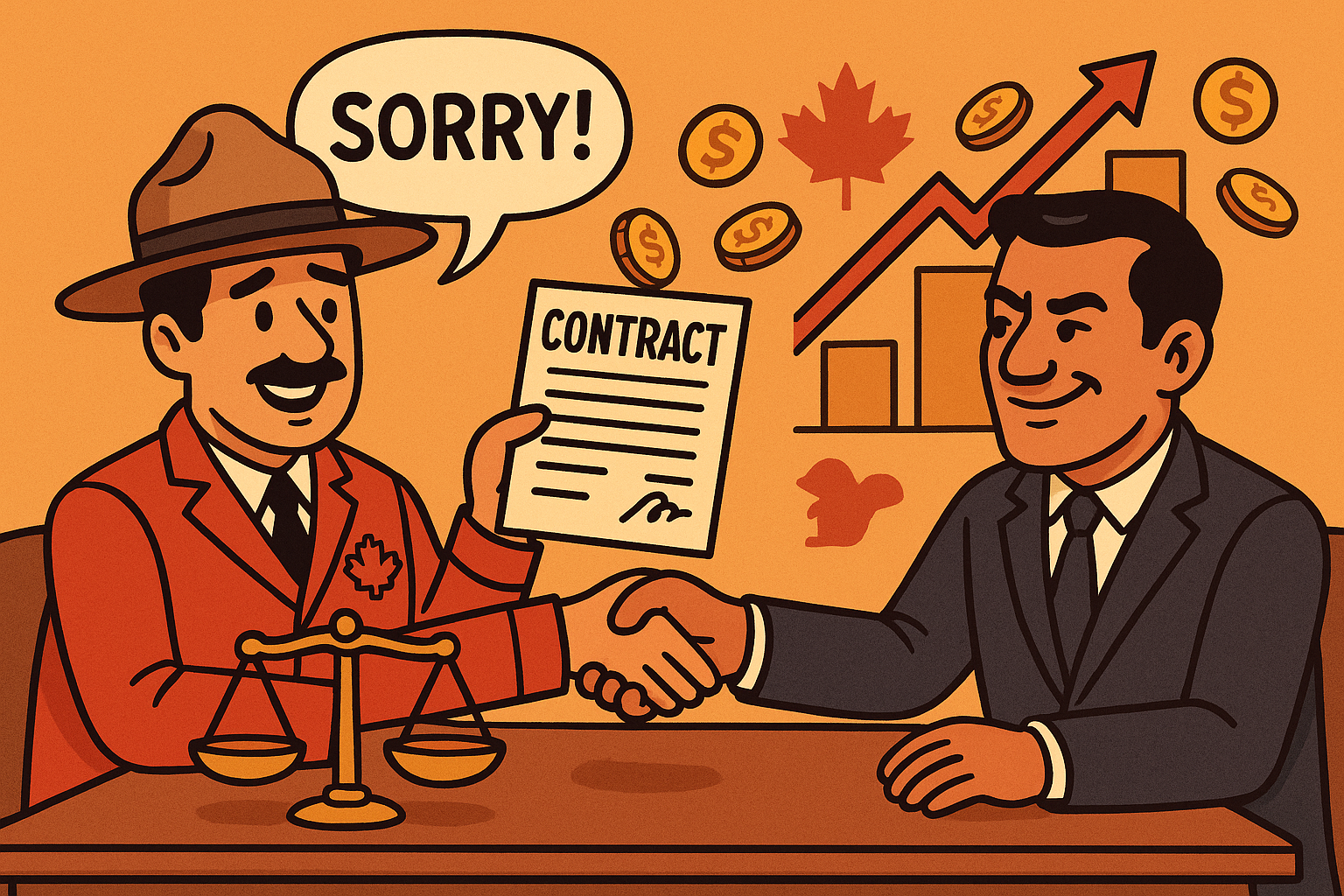
You know that moment when you bump into someone at the grocery store, and you both immediately say "sorry" even though neither of you was actually at fault? That's peak Canadian behavior right there. We're a nation that apologizes to inanimate objects when we walk into them.
But here's the million-loonie question: Is our legendary politeness actually costing us money?
When Being Nice Isn't So Nice to Your Wallet
Picture this scenario: you're a brilliant software developer who gets offered a job in Seattle. Same role, same company, but the American version of your position pays $30,000 more per year. When it comes time to negotiate with your Canadian employer, do you push hard for what you're worth, or do you hold back because you don't want to seem pushy?
If you chose "hold back," congratulations. You've just experienced the Canadian politeness tax.
Think about the last time you were in a salary negotiation. Did you ask for what you were actually worth, or did you ask for something "reasonable" because you didn't want to make anyone uncomfortable? If you're like most Canadians, you probably went with "reasonable", which usually means "less than you deserve."
The numbers back this up too. Canadians consistently earn less than our American counterparts in similar roles, and it's not just because of exchange rates. We're literally leaving money on the table because we're too polite to grab it. It's like we're playing poker with our cards face up while saying "please" and "thank you" after every hand.
The Workplace Apology Olympics
Ever been in a meeting where someone starts their presentation with "Sorry to waste your time, but..." right before presenting an idea that could save the company half a million dollars? Only in Canada would someone apologize for making their employer richer.
Our politeness shows up in business deals too. While American negotiators come in with aggressive opening offers, Canadians tend to start somewhere "fair and reasonable." Guess who usually gets the better deal? Hint: it's not the people saying "sorry" every five minutes.
But here's where it gets interesting. That same over-the-top politeness that costs us in negotiations? It's also building something valuable that you can't put a price tag on: trust.
The Billion-Dollar Smile
Remember when the world thought Americans might elect someone who bragged about grabbing people inappropriately? Tourism to Canada spiked because people wanted to vacation somewhere where the locals would actually say "excuse me" if they accidentally made eye contact.
Our politeness isn't just a cultural quirk. It's a brand. And that brand is worth serious money.
When international businesses choose where to expand, Canada often makes the shortlist partly because we're seen as stable, trustworthy, and easy to work with. Nobody's worried that a Canadian CEO is going to have a Twitter meltdown at 3 AM and tank their stock price. We might bore you to death with our reasonableness, but we're not going to create any nasty surprises.
The tourism industry alone benefits massively from our reputation. People come here expecting friendly service and polite interactions, and we generally deliver. That creates repeat customers and positive word-of-mouth that money can't buy.
The Sorry Syndrome in International Trade
Our "nice guy" reputation does create some challenges on the world stage. Other countries sometimes try to take advantage of our politeness in trade negotiations. It's like being the friend who always picks up the dinner tab because you don't want to make a fuss about splitting it.
Being underestimated can sometimes work in your favor. While everyone's paying attention to the loud, aggressive negotiators, the polite Canadian quietly gets things done. We might not make flashy headlines, but we tend to build lasting relationships that pay off over time.
Strategic Politeness: The Canadian Superpower
The secret isn't to abandon our politeness. It's to learn when to deploy it strategically. Think of it like having a secret weapon that everyone can see but nobody takes seriously until it's too late.
Smart Canadian businesses have figured this out. They lead with politeness to build trust, then use that trust to have honest conversations about value and pricing. It's harder to say no to someone you genuinely like, even if they're asking for a better deal.
Take Shopify, for example. They've built a global empire partly by being the "nice" alternative to more aggressive competitors. Their Canadian politeness becomes a competitive advantage because customers prefer dealing with companies that don't make them feel like they're being sold a used car.
The Loonie and the Long Game
Canadian politeness is like compound interest for relationships. You might not see immediate returns, but over time, it builds something valuable that's hard for competitors to replicate.
Sure, we might lose some individual battles because we're too nice to fight dirty. But we tend to win the long-term wars because people actually want to work with us. In a world where trust is increasingly rare, being genuinely trustworthy is a competitive advantage.
The challenge is teaching ourselves when to be accommodating and when to stand firm. We need to learn the difference between being polite and being a pushover. It's possible to say "I'm sorry, but that price doesn't work for us" with a smile, and mean both parts of that sentence.
The Bottom Line (Said Politely)
Canadian politeness isn't going anywhere, nor should it. But we can be smarter about how we use it. Think of politeness as a business tool, not a personality flaw. Use it to build relationships, create trust, and differentiate yourself in a world full of aggressive jerks.
Just remember: there's a difference between being nice and being naive. You can be polite while still asking for what you're worth. You can be Canadian without being a pushover.
And if all else fails, remember that even our politeness has limits. We invented hockey, after all. Sometimes the gloves do come off.
Sorry, not sorry.
References
Cultural Studies:
- Fire and Ice: The United States, Canada and the Myth of Converging Values by Michael Adams - Amazon Canada
- The Cultures and Organizations by Geert Hofstede - Amazon Canada
- The Canadian Identity by William Kilbourn - Amazon Canada
Economics and Negotiation:
- Getting to Yes: Negotiating Agreement Without Giving In by Roger Fisher - Amazon Canada
- The Economics of Trust by Larry Willmore - Amazon Canada
- Social Capital: A Theory of Social Structure and Action by James Coleman - Amazon Canada
Government and Research Sources:
- Statistics Canada, "Workplace Culture and Compensation Survey 2024"
- Conference Board of Canada, "The Economic Value of Soft Power 2024"
- Tourism Industry Association of Canada, "Brand Canada Research"
- Global Affairs Canada, "Soft Power Index Rankings"
Academic Research:
- Hofstede, Geert. "Cultural Dimensions Theory." 2001
- University of Toronto, "Canadian Values and Business Culture Studies"