Published on February 22, 2025
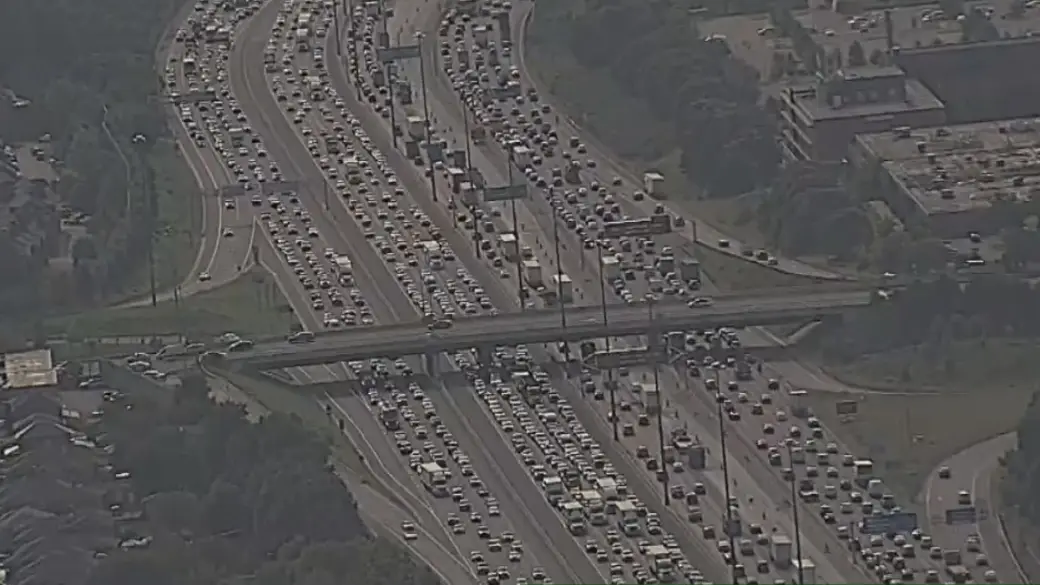
If you've ever been stuck on the 401 during rush hour, you've experienced one of Ontario's most expensive forms of meditation. There you sit, surrounded by 400,000 other vehicles, moving at the speed of bureaucracy while contemplating life's big questions: Why did I choose to live here? Is that truck carrying Tim Hortons supplies? And most importantly, couldn't we have designed this better?
The 401 through Toronto is busier than a Costco on free sample day, and about as efficiently organized. But before we start digging tunnels or building flying cars, maybe we should ask: what if the problem isn't that we need more roads, but that we're using roads for things that don't belong on roads?
The Great Ontario Traffic Mystery
Here's a fun fact that'll make your next traffic jam even more frustrating: a significant chunk of 401 traffic consists of trucks hauling fuel from refineries to gas stations. We're essentially using our busiest highway as a giant, slow-moving fuel pipeline with really bad mileage.
Picture this: thousands of tanker trucks burning diesel to transport gasoline so that other vehicles can burn gasoline while stuck in traffic caused partly by the tanker trucks. It's like an ouroboros designed by someone who failed both economics and environmental science.
Meanwhile, perfectly good rail lines run parallel to the highway, carrying... well, not nearly as much freight as they could be. It's like having a perfectly functional dishwasher but choosing to wash dishes in the bathtub because that's how we've always done it.
Doug Ford's Underground Adventure
Premier Ford has floated the idea of an underground 401, which sounds like something from a science fiction movie but might actually make more sense than it initially appears. Until you remember that Lake Ontario exists and has opinions about large construction projects.
Building underground highways in Ontario means dealing with:
- Geology that doesn't cooperate: The Canadian Shield has spent millions of years perfecting its hardness
- Water tables that object to tunnels: Underground water and underground roads have historically poor relationships
- Costs that would make even lottery winners nervous: Current estimates suggest around $250 million per kilometer, which means the full project could cost more than some countries' entire GDP
For perspective, that's enough money to buy every Canadian a decent car and still have change left over for premium gas. The 407 toll highway cost $1.6 billion for 69 kilometers and doesn't even go underground. An underground 401 would make that look like a sidewalk renovation project.
The Pipeline Alternative (Because Sometimes Simple Works)
Here's a radical idea: instead of building an underground highway to accommodate fuel trucks, what if we built an underground fuel pipeline and got the trucks off the highway entirely?
A fuel pipeline costs about $4.75 million per kilometer to build. Even with the fancy engineering needed for crossing under cities and rivers, we're looking at maybe $4-5 billion for a pipeline system across southern Ontario. Compare that to $100+ billion for an underground highway, and suddenly pipelines start looking like the Tesla of transportation solutions.
The pipeline would:
- Eliminate thousands of fuel trucks from daily highway traffic
- Reduce accident risks involving hazardous materials
- Cut emissions from unnecessary truck transport
- Free up highway space for people and goods that actually need to be on roads
Plus, pipelines don't get stuck in traffic, don't need coffee breaks, and don't complain about other drivers.
The GO Train Freight Revolution
While we're thinking outside the highway, let's talk about those GO trains that run mostly empty outside rush hours. Currently, they're like expensive taxis that only work during specific hours and only carry people.
What if GO trains carried freight during off-peak hours? Trains can move the equivalent cargo of dozens of trucks in a single trip, and they run on fixed schedules regardless of traffic conditions. It's like having a delivery system that operates in a parallel universe where rush hour doesn't exist.
The infrastructure already exists. The rail lines are there, the stations are built, and the trains need something to do when they're not ferrying commuters. Converting some GO capacity to freight transport could dramatically reduce truck traffic while generating revenue during otherwise unproductive hours.
It's such an obvious idea that there must be a good reason why we're not already doing it. Or maybe there isn't, and we've just been overthinking things.
The Economics of Better Ideas
Let's run the numbers on our traffic-fighting options:
Underground Highway: $100+ billion, helps with congestion, creates new environmental challenges, requires ongoing maintenance that would terrify municipal budgets.
Fuel Pipeline Network: $4-5 billion, eliminates fuel truck traffic, reduces emissions, pays for itself through reduced road maintenance and improved traffic flow.
GO Train Freight Integration: $1-2 billion in modifications, dramatically reduces truck traffic, generates revenue, uses existing infrastructure more efficiently.
Doing Nothing: $0 upfront, continuing costs of lost productivity, wasted fuel, and the psychological damage of spending significant portions of our lives motionless on asphalt.
When you put it that way, the underground highway starts looking like the most expensive possible solution to a problem that could be solved much more cheaply with some creative logistics.
The Cultural Shift Required
The real challenge isn't technical. It's convincing Ontarians to think differently about transportation. We've become so accustomed to highways as the solution to every transportation problem that we've forgotten about alternatives that worked perfectly well before we became car-obsessed.
Freight trains used to carry most commercial goods. Pipelines have safely transported liquids and gases for decades. These aren't experimental technologies. They're proven solutions that we've somehow convinced ourselves are less practical than moving everything by truck on crowded highways.
It's like forgetting that email exists and insisting on sending all messages by carrier pigeon because that's what we're used to.
The Political Reality Check
Of course, pipelines and freight trains don't generate the same political excitement as announcing a massive underground highway project. "We're building better logistics systems" doesn't have the same ring as "We're boring a tunnel under Lake Ontario."
But maybe that's exactly the kind of boring, practical policy-making that would actually improve people's lives. Sometimes the best solutions are the ones that make problems disappear quietly rather than dramatically.
The Bottom Line (Without Traffic)
Ontario has a choice: spend $100+ billion on an underground highway that solves congestion by adding more road capacity, or spend a fraction of that amount on solutions that eliminate the need for much of the traffic in the first place.
We could build pipelines to move fuel efficiently, use existing rail infrastructure to carry freight, and reserve highways for people and goods that actually need to travel by road. It's less exciting than underground mega-projects, but it's also more affordable, more sustainable, and probably more effective.
The 401 will always be busy. It connects too many important places to ever be empty. But it doesn't have to be a slow-moving parking lot filled with trucks carrying things that could be transported more efficiently by other means.
Sometimes the best way to solve a traffic problem isn't to build more roads. It's to question why everything needs to travel by road in the first place.
Though if we do end up building an underground highway, I vote we include Tim Hortons rest stops every five kilometers. If we're going to do something expensive and complicated, we might as well do it in the most Canadian way possible.
References
Infrastructure and Transportation:
- The High Cost of Free Parking by Donald Shoup - Amazon Canada
- Traffic: Why We Drive the Way We Do by Tom Vanderbilt - Amazon Canada
- The Option of Urbanism by Christopher Leinberger - Amazon Canada
Government Sources:
- Ministry of Transportation Ontario, "Highway 401 Traffic Volume Data"
- Infrastructure Ontario, "Major Project Cost Estimates"
- Metrolinx, "Greater Golden Horseshoe Transportation Plan"
- Transport Canada, "National Transportation Policy Framework"
Research and Planning:
- University of Toronto Transportation Research Institute
- Canadian Urban Transit Association, "Modal Share Studies"
- Toronto Region Board of Trade, "Cost of Congestion Report 2024"
- Personal experience being amazed that we transport fuel by truck in 2025